
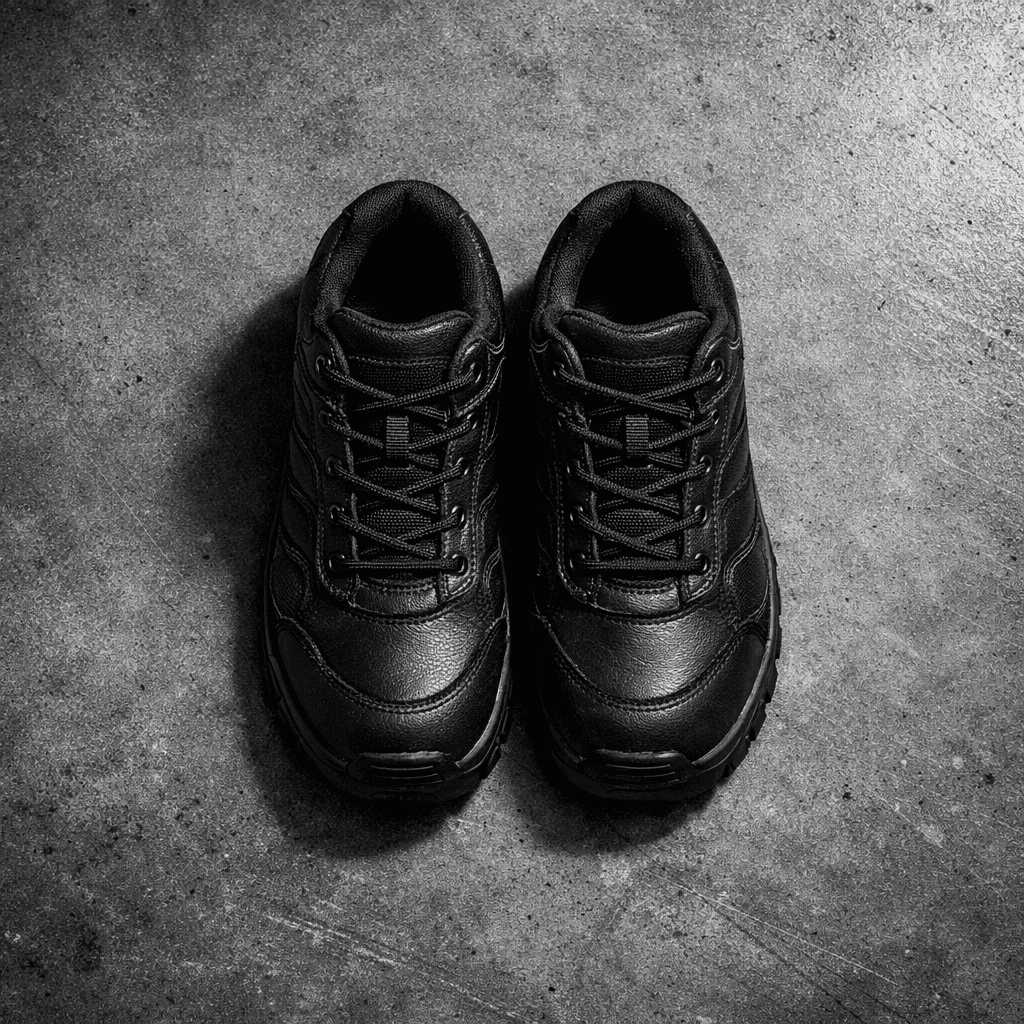
An Executive Guide to Surviving 14,000 Steps a Day on Polished Retail Marble.
Over the last 15 years of managing high-volume store floors and scaling monthly retail revenues up to ₹1.82 Crore, I have watched hundreds of talented Assistant Store Managers burn out by Month Six.
When regional leadership visits a struggling store, they look at the planogram, they look at the stockroom, and they look at the rostering. They almost never look at the floor manager’s feet.
In retail operations, your brain is the software, but your feet are the primary hardware. If the hardware is overheating, the software stops running optimization loops. When a floor manager's shins are throbbing, they stop walking the perimeter to check for shrinkage; they stand behind the cash wrap leaning on the counter. The moment leadership leans, the floor bleeds.
Here is the unvarnished operational truth regarding the footwear required to survive 14,000 steps a day on polished concrete and vitrified marble.
1. The "Rookie Tax" (And the ₹500 Trap)
When I was a 22-year-old fresh graduate stepping onto the floor for my first major floor management role, I made the classic rookie mistake. The corporate dress code mandated "Formal Black Footwear."
Wanting to look like a serious executive on a tight trainee budget, I went to the local market and bought a pair of stiff, glossy, synthetic black leather lace-ups for ₹550.
By Week Three, my lower back was completely locked up. By Week Four, I was experiencing early-stage shin splints, and I found myself subconsciously hunting for step-stools in the receiving bay just to get my heels off the ground for three minutes. I eventually yielded to operational reality, took my next paycheck, and upgraded to an ₹1,100 branded cushioned unit.
The Operational Law: Never buy "dress footwear" for a retail floor. Buy amortized performance. If a ₹8,000 pair of engineered running shoes lasts you 18 months of 12-hour shifts, your actual cost of operational comfort is roughly ₹14 a day. Denying yourself ₹14 a day to protect your spinal column is catastrophic personal finance.
2. The "King of the Floor" (The Daily Pivot Machine)
When you are managing a 12,000 square-foot floor, you are not engaging in linear walking; you are pivoting. You are turning 90 degrees to check a promotional dump-bin, stopping dead in your tracks to answer a customer inquiry, and reversing direction to catch a stock associate.
For standard daily floor operations, the undisputed kings of my career have been the flagship stability lines from Adidas and Reebok.
Why these two specific manufacturers? The density of their EVA midsole foam. Soft, cloud-like "marshmallow" foam (common in modern lifestyle sneakers) feels great for the first 40 minutes, but by Hour Eight, your foot sinks completely through the foam and rests against the hard strobel board. You need a dense, high-energy return compound that refuses to compress under body weight over a 12-hour window.
The Floor Operator’s Pick: Click to View & Purchase this beast one 👇
Adidas Unisex-Adult Ultraboost 1.0 Running Shoe.
3. The "Pallet Kicker" (The Receiving Bay Tank)
Every retail operator knows that the real war is fought at 6:30 AM at the back-of-house loading dock.
When a 32-foot container arrives holding 500 master cartons of high-shrinkage inventory, you are not a host; you are a warehouse logistics coordinator. You are using your foot to kick heavy wooden pallets to check for ground clearance, and you are navigating tight stockroom aisles packed with sharp metal shelving units.
If you wear standard woven mesh running shoes into a receiving bay, it is only a matter of time before a falling 18kg master carton lands on your foot, or a splintered wooden pallet tears the upper wide open.
For stock-take days, delivery mornings, and deep warehouse audits, you retire the mesh runners and put on the "Pallet Kicker." You require a genuine tough leather upper (which acts as armor against falling objects and spilled chemical liquids) combined with a hardened, reinforced toe box.
The Heavy-Duty Pick: Click to View & Purchase this beast one 👇
Woodland Men's DBROWN Leather Sneaker
4. The Secret Weapon: Mechanical Grip over Muscle Tension
When junior managers ask me what aftermarket gel insoles or orthotics I use inside my shoes, my answer always surprises them: None.
I use standard, medium-length breathable socks, but I strictly mandate one physical feature on the bottom of the shoe: High-density multi-directional rubber lugs (the "rubber spike" outsole).
Here is the hidden physics of Indian retail floors: High-end shopping malls utilize mirror-finish vitrified tiles or polished Italian marble. When the housekeeping staff runs the wet mop over these aisles at 11:00 AM, that vitrified marble turns into a frictionless sheet of ice.
If you are wearing a standard flat foam sole, your central nervous system detects the lack of floor friction and subconsciously locks up your calf and hamstring muscles for nine hours straight just to keep you from slipping. You go home with screaming leg cramps and you don't even know why.
By wearing a trail-inspired or high-traction lugged rubber bottom, the mechanical "spikes" bite through the surface layer of moisture and grip the marble. Your nervous system turns off the emergency balancing protocol, your calves relax, and your physical battery extends by three hours.
The High-Traction Pick: Click to View & Purchase this beast one 👇
Puma Extend Lite Trail Running Shoe (Unisex-Adult Black-Cool Dark Gray Shoe)
Summary for the Operator:
Look down at your feet right now. If you are wearing a flat, paper-thin lifestyle sneaker or a stiff wooden-heeled formal shoe, you are operating your store with a permanent 15% physical handicap.
Upgrade your hardware. Protect the software. Scale the floor.