
introduction: the world of retail and supply chain, we often talk about "last-mile delivery." But for the global economy, the "first mile" starts at a 21-mile-wide strip of water: The Strait of Hormuz. This is not just a maritime corridor; it is a geographical miracle—a "God-gifted" chokepoint that holds the keys to 20th-century energy and 21st-century technology.

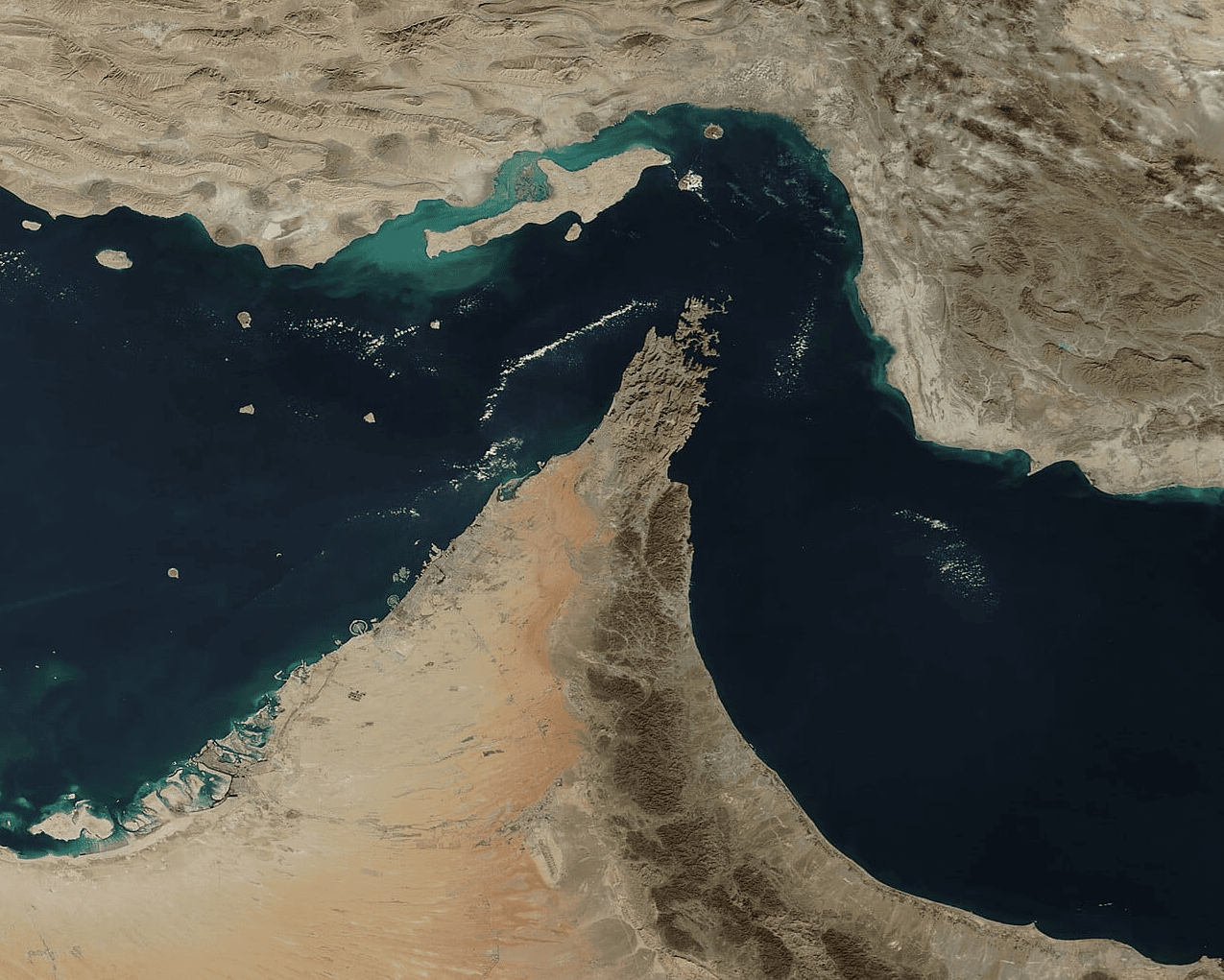
1. The Geography of PowerAs seen in the bathymetry and satellite maps (CIA/NASA), the Strait is a narrow bottleneck. It is the only gateway from the Persian Gulf to the open ocean. While international law calls for free passage, the physical control lies with Iran and Oman. In early 2026, we saw how a 95% drop in traffic due to regional tensions didn't just raise oil prices—it threatened to halt the world. 2. Asia’s "Eye-Opener":-
The Data of Dependency: Asia doesn't just use the Strait; it depends on it for its very existence.
The 80% Rule: Over 80% of the crude flowing through here goes to Asia.
The India Factor: For us in India, the stakes are personal. Nearly 90% of our imported LPG (cooking gas) and 45-55% of our LNG transits this Strait. When Hormuz "sneezes," every household in India feels the fever through fuel inflation and fertilizer costs.
The Tech Link: In 2026, the Strait is also a tech chokepoint. Critical materials like bromine (essential for semiconductors) and helium transit here. A closure today is a "heart attack" for AI development and electronics manufacturing in South Korea and China.
3. Why the U.S. and Israel are Watching Iran: The focus on Iran by the U.S. and Israel is backed by hard data:
The $200 Threat: Disruptions in March 2026 pushed Brent crude toward $126. Experts warn a total 30-day blockade would send oil to $200/barrel, slashing global GDP by up to 10%.
Strategic Leverage: By holding the "tap," Iran gains asymmetric leverage over global markets. For the U.S. and Israel, neutralizing this threat is about ensuring that no single nation can "veto" the global economy.
4. The Road Ahead: What Must Asia Do? Asian giants can no longer be "security consumers"; they must be "security providers."
Diversify Sourcing: India’s recent move to surge LPG imports from Argentina and the U.S. is a masterstroke in risk mitigation.
Pipeline Diplomacy: Support for bypass routes, like the UAE’s Fujairah pipeline, must be a top priority for Asian investors.
Conclusion: The Strait of Hormuz is a reminder that our high-tech world still rests on ancient geography. To keep this area battle-free, we must stop viewing it as a "war zone" and start treating it as a Global Commons. Peace in Hormuz is not a political luxury—it is the baseline for global betterment.
The Tech Link: In 2026, the Strait is also a tech chokepoint. Critical materials like bromine (essential for semiconductors) and helium transit here. A closure today is a "heart attack" for AI development and electronics manufacturing in South Korea and China.
3. Why the U.S. and Israel are Watching Iran: The focus on Iran by the U.S. and Israel is backed by hard data:
4. The Road Ahead: What Must Asia Do? Asian giants can no longer be "security consumers"; they must be "security providers."
Diversify Sourcing: India’s recent move to surge LPG imports from Argentina and the U.S. is a masterstroke in risk mitigation.
Pipeline Diplomacy: Support for bypass routes, like the UAE’s Fujairah pipeline, must be a top priority for Asian investors.
Conclusion: The Strait of Hormuz is a reminder that our high-tech world still rests on ancient geography. To keep this area battle-free, we must stop viewing it as a "war zone" and start treating it as a Global Commons. Peace in Hormuz is not a political luxury—it is the baseline for global betterment.