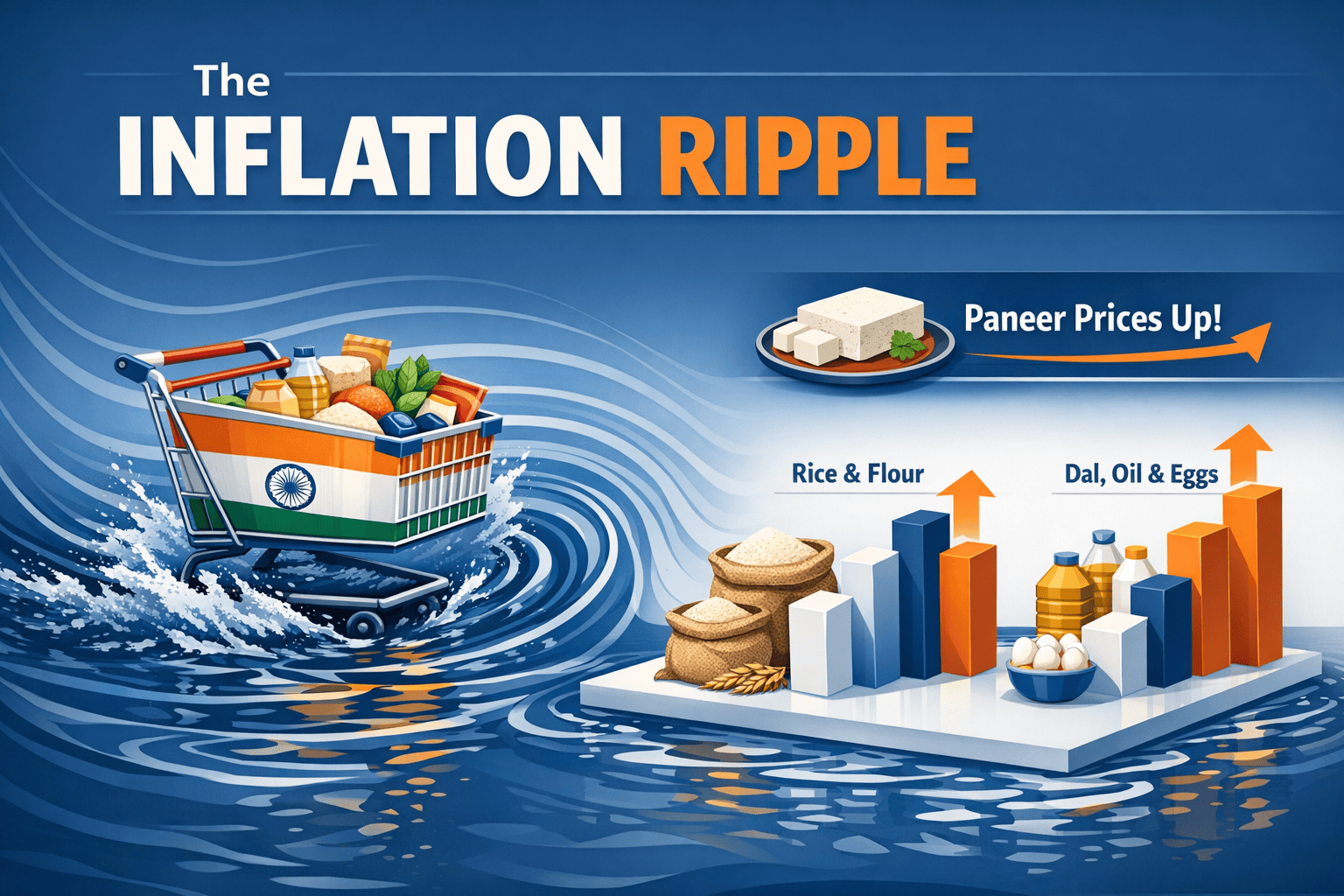
The Inflation Ripple: A Retail Operations Perspective on India’s Grocery Bill by Vyas mani Pandey (PGDJMC) Store Operations Leader & Digital Content Strategist
In my 15 years in the retail sector, I have managed thousands of SKUs (Stock Keeping Units). But as we move through April 2026, the most important "unit" isn't sitting on a shelf—it’s the barrel of oil currently navigating the Strait of Hormuz. For the average Indian consumer, geopolitics often feels distant. However, as an operations manager, I see the "Inflation Ripple" long before it hits the price tag. Here is a balanced, business-focused look at how global tension is reshaping our local retail landscape. 1. The Logistics Surcharge: The Hidden Cost of Diesel: -
Retail is a game of movement. In India, our supply chain is the backbone of the economy, and that backbone runs on diesel. The Business Fact: With crude oil prices hovering near $126/barrel due to the March 2026 volatility, transportation costs have surged. The Balanced View: While the government has worked to insulate retail fuel prices, "pass-through" costs are inevitable. When it costs 15% more to move a truck from a warehouse in Lucknow to a store in Prayagraj, that cost must be absorbed somewhere. Often, this leads to a marginal increase in the Base Transfer Price of essential goods. 2. The Petrochemical Paradox: Packaging and "Shrinkflation": - Most consumers don't realize that their shampoo bottle or biscuit wrapper is essentially "solidified oil." The Business Fact: Petrochemicals are the raw materials for plastic packaging. High oil prices increase the cost of these materials. The Strategy: To protect margins without shocking the consumer with a high price, many FMCG (Fast-Moving Consumer Goods) companies resort to "Shrinkflation." You pay the same ₹10, but the net weight of the product drops by 5–8 grams. As a Store Manager, I see this as a necessary operational tactic to maintain "price-point stability" in a volatile market. 3. The "Stock-Out" Stress: Supply Chain Lead Times: - Operationally, "Lead Time" is the time it takes for a product to travel from the factory to the shelf.
The Business Fact: The current closure of the Strait (as of April 18, 2026) has forced ships to take longer, more expensive routes. The Result: We are seeing a 5–10 day delay in the arrival of certain imported raw materials. For a retailer, this means higher "Safety Stock" requirements, which ties up working capital. The Balanced View: While this causes temporary "Stock-Outs" on some premium shelves, it is also a massive opportunity for Local Sourcing. 2026 is the year where "Made in India" moves from a slogan to a supply chain necessity. 4. Policy Buffers: The Government’s Role: - It is important to note that India is not defenseless. The recent Petrochemical Duty Cuts (April 2026) have provided a vital cushion. By reducing import duties on plastic raw materials to 0%, the government has helped drop packaging costs by roughly 3–8%, partially offsetting the rise in energy prices. This is a "masterstroke" in balancing industrial survival with consumer protection. Conclusion: - The "Vyas Insight" As an operations professional, my advice is simple: Operational Efficiency is the best hedge against inflation. For the retailer, it means optimizing routes and reducing waste. For the consumer, it means being mindful of the global "ripple." We are living in a world where a maritime blockade in the Gulf is directly linked to the cost of a bar of soap in Uttar Pradesh. Understanding this link is the first step toward managing it. Click here to Read In details